Pet-Safe Cleaning Products
Dogs and cats groom themselves by licking, and they usually do it minutes after walking across the floor you just mopped. That one habit is why "pet-safe" is not marketing language — whatever you leave behind on a floor ends up inside your animal the same day. The useful part is that the safest routine is also one of the cheapest.
What to keep out of the cabinet
Read the ingredient panel, not the front of the bottle. These are the ones worth avoiding when you share the place with an animal:
Concentrated essential oils — tea tree, pine, citrus, eucalyptus, and wintergreen show up in most "natural" sprays. Cats lack an enzyme that processes them, so a scent that reads as light and clean to you is a real load on their liver.
Ammonia — it smells like urine to a dog, which is an open invitation to mark the same spot again. It also irritates airways in a closed apartment.
Phenol-based disinfectants — the kind that turn cloudy when you add water. Hard on cats specifically.
Chlorine bleach — usable, but only well diluted, with windows open, and fully rinsed and dried before paws come back.
Glycol ethers in glass and all-purpose sprays, and quaternary ammonium compounds ("quats") in most disinfecting wipes. Both are contact irritants for paw pads.
What actually works instead
Hot water and a real microfiber mop. Microfiber lifts dust and hair mechanically, so most routine floor cleaning needs no chemistry at all.
Unscented castile soap, a teaspoon in a gallon of warm water, for kitchen floors and anything greasy. Rinse it — soap residue attracts dirt faster than dirt does.
Distilled white vinegar diluted about one to four for glass, hard water spots, and stainless. Skip it on marble, travertine, and unsealed stone, which it etches.
An enzyme cleaner for accidents. Enzymes digest the proteins that keep an odor alive; masking sprays only cover them, and the animal still finds the spot.
Three percent hydrogen peroxide for spot work on light-colored fabric. Test a hidden corner first.
Habits matter more than the bottle
Even a gentle product is only safe when it dries. Keep pets in another room while you clean, and out of the room until the floor is dry to the back of your hand — thirty minutes is usually enough. Ventilate while you work; a dry Santa Ana afternoon in the South Bay will clear a room faster than any fan. Store everything above counter height, because the most common poisoning is not a residue on the floor, it is a chewed bottle under the sink.
Where a service fits
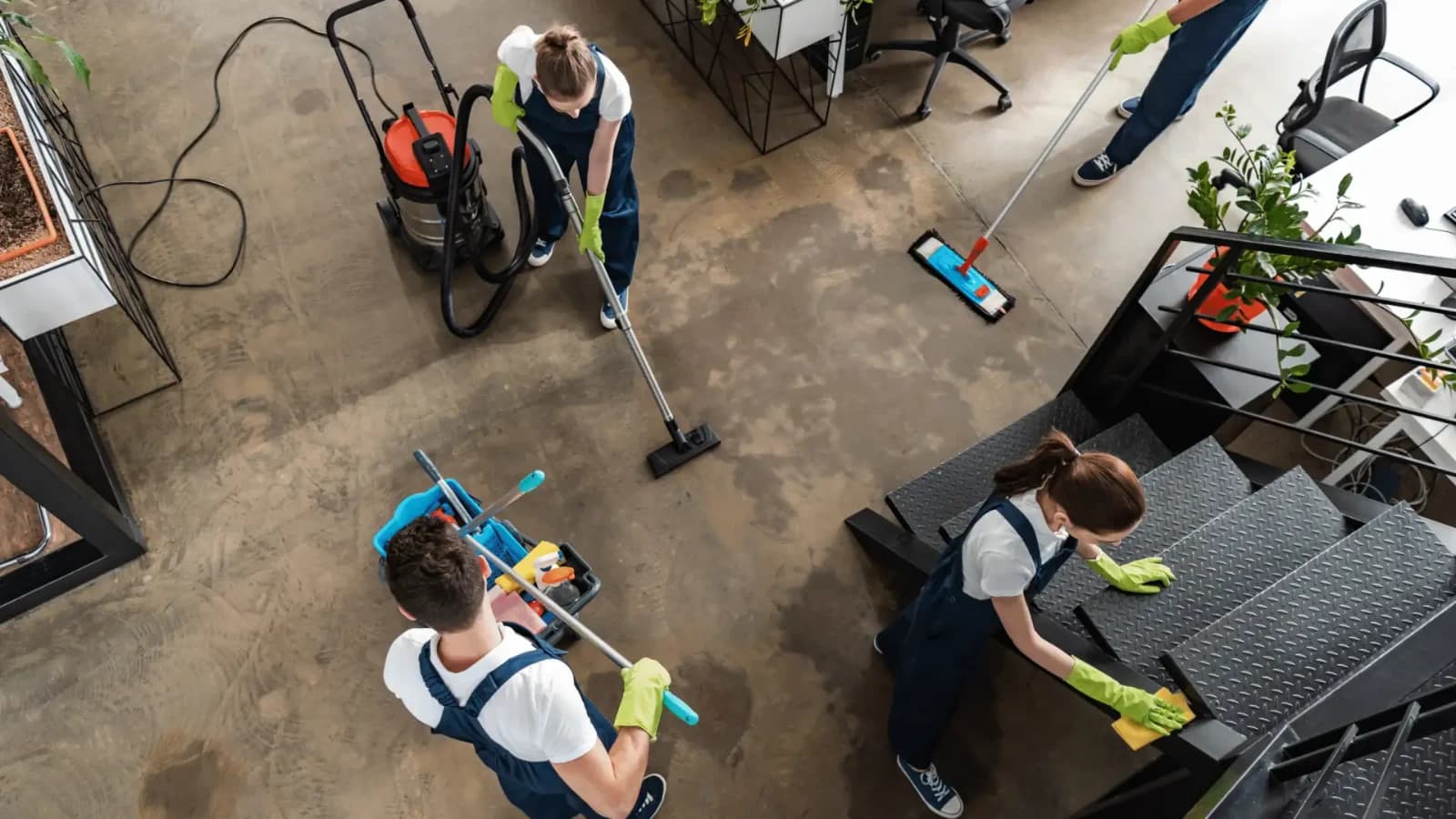
Shedding season never really ends in Los Angeles, and hair works its way into baseboard edges, vents, and the gap under the fridge, where a weekly vacuum never reaches. If you bring in help, say up front that you have pets and ask what goes on the floors. Any crew worth hiring will tell you the exact product and how long to keep the dog off it.