How to Clean an Oven Without Harsh Chemicals
A greasy oven is one of those jobs people put off until smoke starts pouring out on Thanksgiving morning. The good news is that you almost never need a caustic spray to fix it. Baking soda, white vinegar, dish soap and a little patience will lift baked-on grease without leaving your kitchen smelling like a chemistry lab.
Why skip the aerosol oven cleaner
Most heavy-duty oven sprays are built around sodium hydroxide, better known as lye. It works fast, but it burns skin, irritates lungs, and leaves a residue you have to rinse three or four times to fully remove. In a small Torrance apartment kitchen with one window over the sink, that smell hangs around for two days. The baking soda method takes longer on the clock but almost none of your attention: you start it at night and finish it over coffee.
What you will need
About 1 cup of baking soda
Water, added a few tablespoons at a time
White vinegar in a spray bottle
A few drops of dish soap
A plastic scraper or an old spatula (never steel wool on enamel)
Microfiber cloths and a bowl of warm water
The overnight paste method
1. Empty it and dry-brush first
Pull the racks out and sweep loose crumbs off the oven floor with a dry cloth. Wet crumbs turn into mud that smears everywhere, so this step comes before anything gets damp.
2. Spread the paste
Mix the baking soda with just enough water to make a spreadable paste, closer to frosting than to soup. Wipe it over every interior surface except the heating elements and the fan vent. It will turn brown where the grease is worst, which is exactly what you want to see. Leave it at least 8 hours, or simply overnight.
3. Scrape, then spray
In the morning, scrape the dried paste out with the plastic scraper and wipe with a damp cloth. Mist whatever white film is left with vinegar. It foams a little, and that reaction loosens the last of the residue. Wipe again with clean warm water until the cloth comes away white instead of gray.
4. Soak the racks
Put the racks in the tub with the hottest water your tap gives you, a squirt of dish soap and half a cup of baking soda. An hour of soaking beats twenty minutes of scrubbing. Line the tub with an old towel first so the metal does not scratch the finish.
The glass door
The window is usually the ugliest part and the easiest win. Paste it, wait thirty minutes, and wipe in straight lines rather than circles. Circles push grease into the corners of the gasket, where it bakes on again the next time you preheat.
Keeping it from getting that bad again
Slide a sheet pan onto the rack below anything that bubbles over.
Wipe spills once the oven cools, not next weekend.
Run the paste treatment twice a year. Twenty minutes of upkeep beats a lost Saturday.
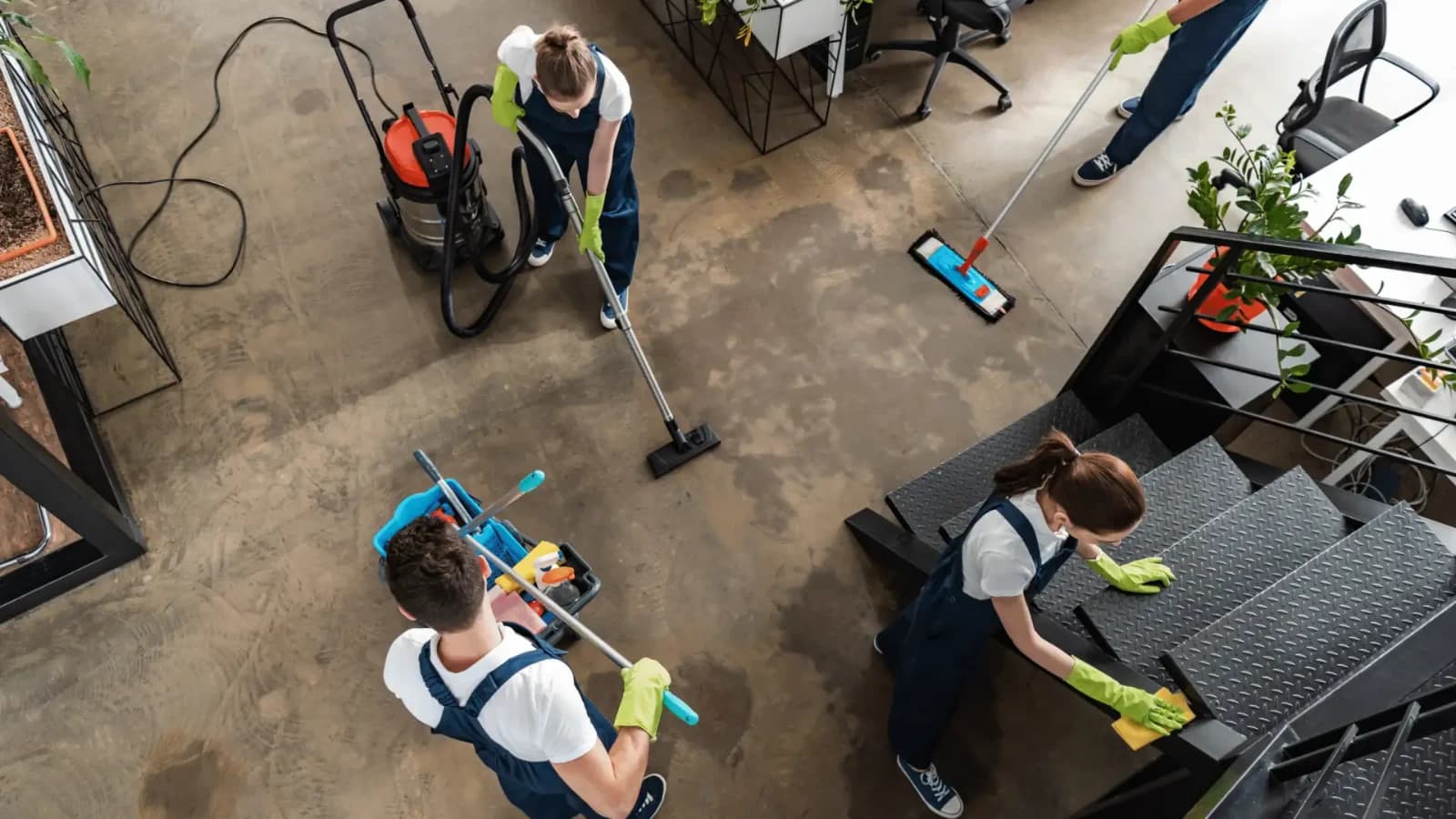
If the grease has carbonized into a hard black shell, or you are handing back keys and a landlord is going to open that door with a flashlight, this is a job worth handing off. Ovens are included in our deep cleaning service, and our crews across Los Angeles and the South Bay use the same low-odor approach in your kitchen that we just described.